
 May 31, 2026 North Central MN Tour Featuring "The Walleyes" Classic Performances
 “Keeping an eye on a world going by my window, please don’t wake me, no don’t shake me, leave me where I am, I’m only sleeping … ♫♩♪”. If you don’t already know those lyrics by the Beatles, then I hope you’ll do yourself a favor and get familiar, it’s a fabulous song! (YouTube) >> I’m Only Sleeping, Beatles
You may already know, “The Walleyes”, a popular cover group, have been performing that popular song for many years. So far, this season, they’ve been touring many north central Minnesota lakes, and they’ve done their best to convince us to just leave them where they are and let them sleep.
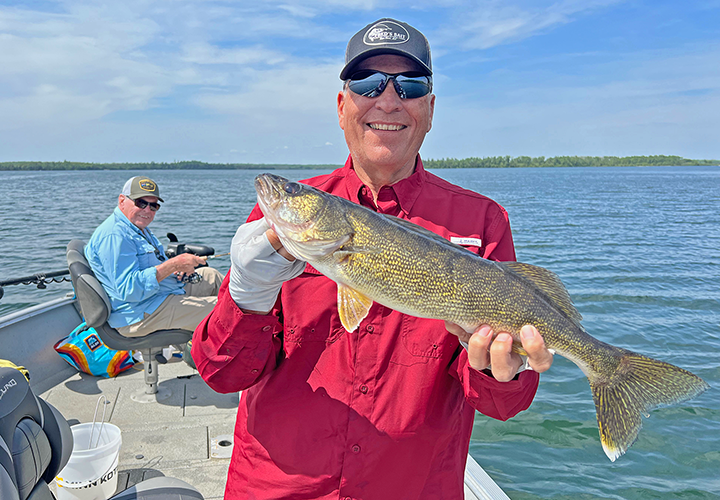
That’s beginning to change though, warming water temperatures, newly emerging vegetation and baitfish migrations are waking more of them up every day. On Saturday, fishing with Dick and Paul took us to one of the preferred lakes in our annual rotation. It was one of “those days” the weather was too sunny, not windy enough, and the lake’s water temperature, around 63 degrees, was on the cool side.
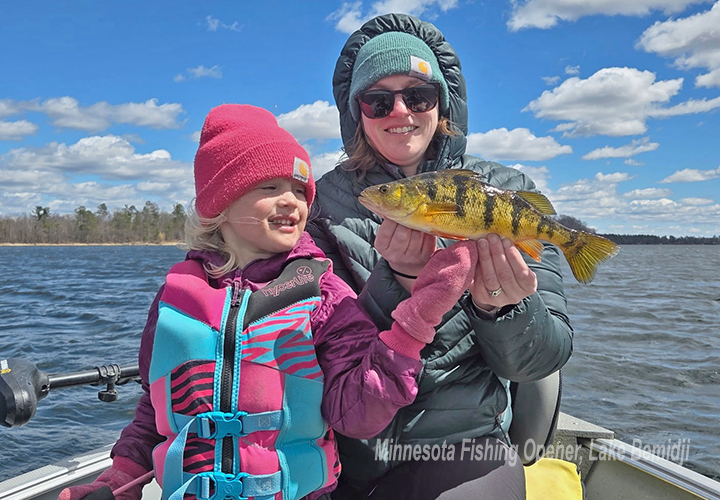
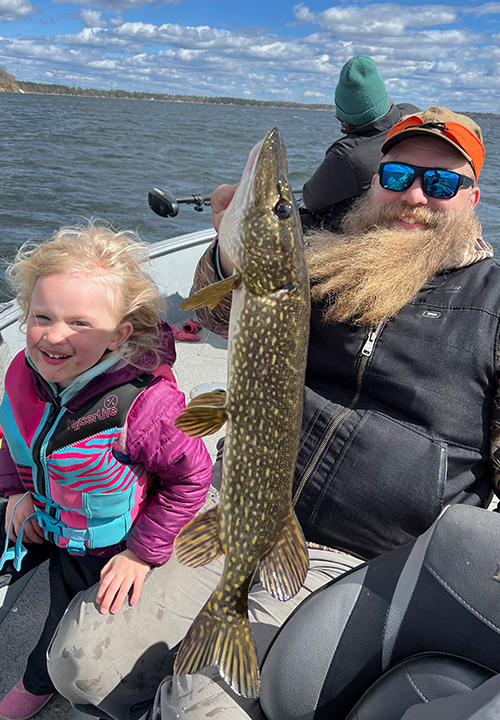
 Walleyes were catch-able, but somewhat sluggish, and not fully on the move. Still, we managed a good day; maybe not great, but decent. We captured enough for a fish fry at Gosh Dam Place and added a couple of fish in the larder for the boys’ trip back home. Along the way, we released about a dozen protected slot fish, some northern pike and an assortment of perch and bass.
The secret, if you want to call it that, was making lots of stops, fishing methodically and being somewhat stubborn. Some of the fish we discovered were deeper, but for the most part, shallow water, 6 to 9 feet, held most of the active ones. Habitat varied from spot to spot; cabbage, coontail, and patches of newly emerging northern milfoil all held some fish. If there were rocks adjacent to the weeds, then there would be more fish. If there were weeds, rocks and bulrushes adjacent to steep shoreline breaks, then there were even more.
Jigs, 1/8-ounce size, tipped with minnows was the only presentation we used. Slowly backtrolling, casting toward shore, and working the lures back to the boat using a light “hop-drop-hop-drop” retrieve accounted for the most strikes. Drifting, when there was enough breeze, accounted for a few fish, but not a lot.
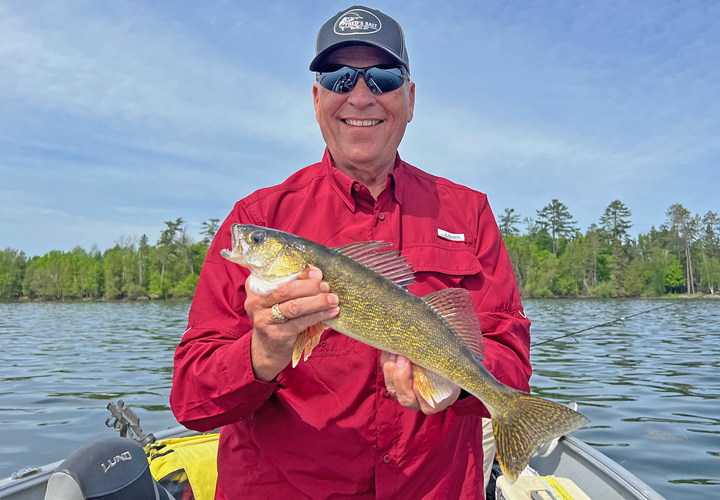 I had a weak moment yesterday and bought some spottail shiners, this was a waste of money for me. For us, larger fatheads worked easily as well, and unlike the shiners, they stayed alive in my minnow tank. Within an hour, most of the shiners had died, so I put them on ice and used dead minnows throughout the day. They worked too, but I can’t say that they worked better than the chubs did.
Live Bait Tip: If you are a true believer in using spottails, but have trouble keeping them alive, do not throw them away! Use a quart-size Ziplock bag with a few paper towels to keep the bait dry. Put the bag on ice and the minnows will last all day long. There have been times when we’ve seen the dead minnows work better than live ones. My working theory is that the lighter colored, but still shiny minnows look different and maybe more noticeable to the fish. Try them yourself and let me know what you think.
On Friday, day 2 of Fun with Dick and Paul, we spent the day on a small, multi-species lake. We started off on a small shoreline related bar where we quickly added 1 walleye to the larder. A few northern pike later, I noticed a young man fishing near the shoreline. I could see him catching fish occasionally and began keeping tabs on his progress. Sunfish, crappies and the odd bass splashed the surface, and then air lifted into his boat. “Okay boys, we gotta go try something, I said”.
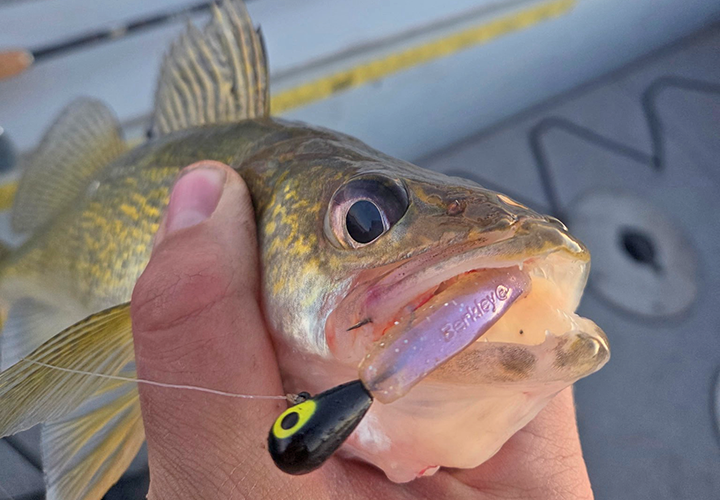
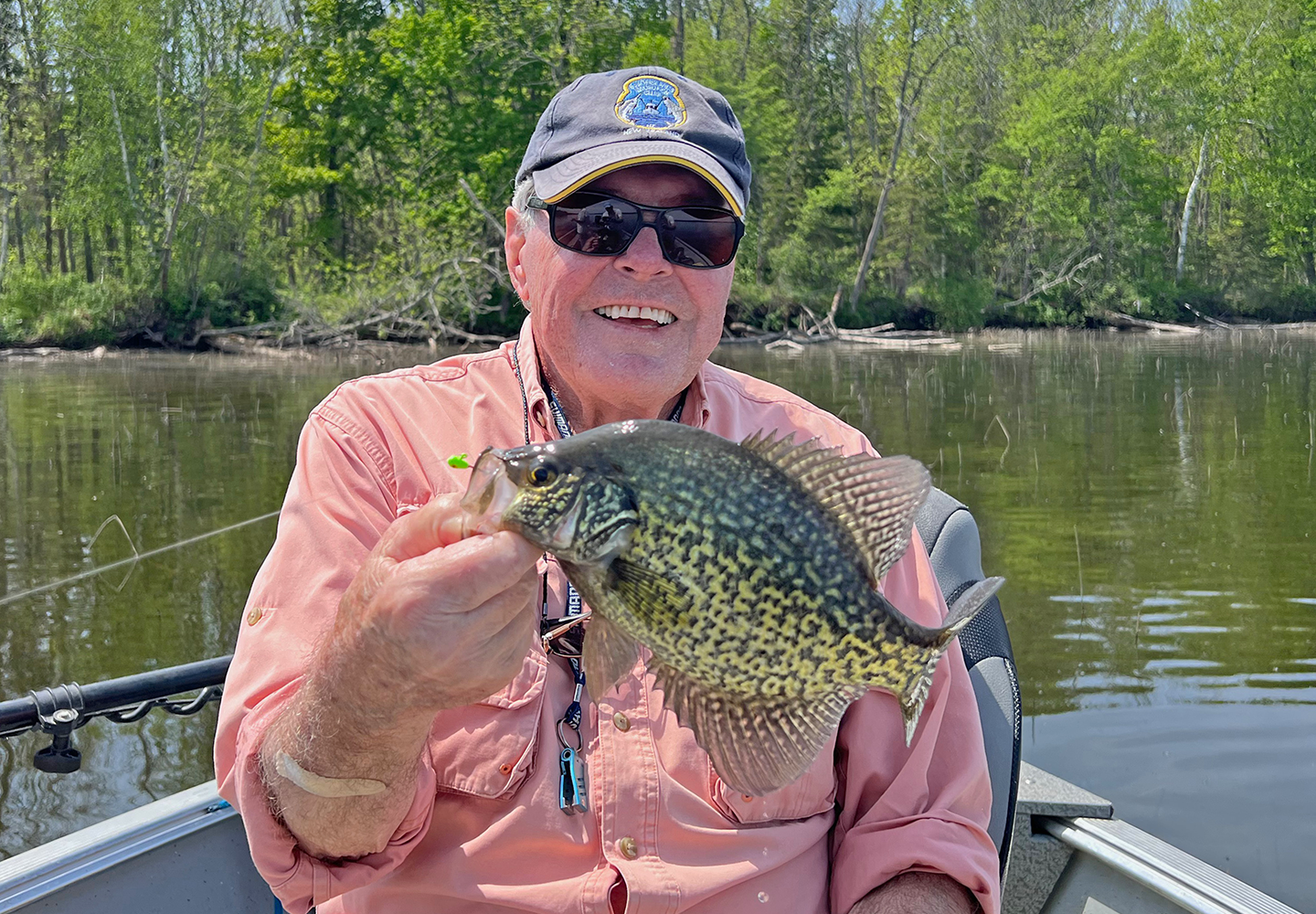 We moved into position further down the shoreline and began working shallow water using 1/16-ounce jigs tipped with Berkley’s Power Nymphs. At first, we caught mostly sunfish and small pike, and I was getting ready to move back out the “the walleye hole”. Just then, I spotted a crappie moving through the bulrushes. We caught 1 crappie, then a couple of keeper size sunfish and from then on, our day turned into a multi-species panfish and crappie trip.
By now, most folks who fish for panfish already know this, but as a reminder, water temperatures are ideal, mid-to-high 60s. Panfish are roaming the shallows and almost every good crappie or sunfish lake produces good catches. In the words of Eric Perrington at Fred’s Bait yesterday morning, “I don’t know why anybody is fishing for walleyes when the panfish are biting everywhere.” In case you haven’t been out yet, but were thinking about it, I wouldn’t wait too long.
We didn’t see many fish holding tight to spawning beds, but they were clearly showing interest. Some bad had been fanned out and had fish on them. Many of the fish we caught were roamers, apparently searching for locations to set up for spawning. On that lake, the fish may remain in the shallows for several more days. Other lakes are surely in various stages of development, so there may be some activity for another week or so, depending on the weather.
Today, day 4 of 5, Fun with Dick and Paul is slated to be our “walleye or die” fishing day. If the forecast warrants, I’m leaning toward a trip to Red Lake, but the final decision won’t be made before picking the crew up. There are good reports coming in from some of the other more popular walleye lakes in my region too and maybe we’ll try one of those.
Could it be that “The Walleyes” are taking “I’m Only Sleeping” off their playlist for a while? I think maybe so, in fact I think I can hear them warming up now, yes, they are, listen, it’s another great song … ♫♩♪ “If you want it, here it is, come and get it … ♫♩♪”  — Jeff Sundin, The Early Bird Fishing Guide Call-Text 218-245-9858 • Email • Facebook • X • Subscribe Insider Newsletter
 ALERT SPECIAL News Release "BUY FISHING LICENSE BEFORE JUNE 1, 2026" Minnesota DNR's new, transformative electronic licensing system will launch on June 9, 2026
 "The Minnesota Department of Natural Resources will launch the first phase of its modernized electronic licensing system on June 9 with the fishing and hunting license module, replacing a system that has served the state for more than 25 years.
“The Minnesota DNR is excited to introduce a modern licensing system designed to improve the experience for Minnesotans and visitors alike,” said DNR Commissioner Sarah Strommen. “Whether purchasing a license, permit, or registration, users will be able to enjoy hunting, fishing, and other outdoor opportunities more quickly through convenient, flexible, and user-friendly tools.”
The new ELS is a modern and secure system that offers more flexibility than ever — three ways to buy a license (mobile app, online, or in-person from a license agent) and three ways to carry it (paper, PDF, or stored in the app). Customers can purchase, store, and even register harvests from anywhere, including areas without cell service.
The existing licensing system will be in use until 11:59 p.m. Monday, June 1, when information from the old system begins moving to the new system, including licenses purchased through June 1.
As the DNR transitions data to the new ELS, fishing license sales will be paused and anglers may fish without a license from 12 a.m. Tuesday, June 2, through 11:59 p.m. Monday, June 8. All other fishing season regulations and bag limits will remain in effect. At 12 a.m. June 9, the new ELS will be available for anglers and hunters. As the new system launches, DNR and its partner PayIT will have plenty of staff on hand to help users through the transition along with user guides and how-to videos.
Phase two of the launch will happen at a later date with the recreational vehicle and watercraft titling and registration module. For now, that titling and registration process will remain the same, and the legacy system will remain operational.
When fully launched, the new ELS will support millions of transactions across a catalog of more than 400 license and permit products each year and bring the licensing experience into the modern era.
Updates from the Minnesota DNR about the new electronic licensing system are available here >> Minnesota Fishing License System Updates."

 Lake Winnie Cutfoot Sioux Fishing Report May 28, 2026
 "It is often said that history repeats itself, but seldom do 2 fishing seasons match as closely as we see this season. Remember our fishing report for this same week last year? In it, we offered, “Out are the cold and blustery conditions that tested guests who fished with us last week. In, are warmer air temperatures, sunshine and calmer breezes. Revealed are ultra-clear water, along with flighty walleyes.” For more, read the full Bowen Lodge Fishing Report May 25, 2025
The temperatures, both water and air, are tracking closely with those we observed last year. This week, we’ve seen air temperatures rise into the mid-80s and under bright sunshine, surface temperatures increasing dramatically. On Tuesday, dark water areas on Little Cutfoot reached into the mid-70s. The clearer waters of Winnie and Cutfoot managed to reach the 66-to-68-degree range.
Shiners, small perch and other “baitfish” were encouraged to move onto shallow water flats. Walleyes, larger perch and northern pike followed and could be seen without the aid of electronics. In the clear water though, most of those fish ..." Read >> Bowen Lodge Lake Winnie Fishing Report May 28, 2026
 Lake of the Woods Fishing Report May 27, 2026
 "The warmer weather has arrived and fishing is turning on as water temps climb into the high 40s to low 50s. This is the transition anglers have been waiting for, and the bite is responding. Walleyes are being caught shallow to deep based on their feeding activity, but generally, 20 to 26 feet has been strong for finding good numbers of fish. Don't be surprised to find nice fish in 5 to 15 feet this time of year as well.
A jig and minnow remains the go-to presentation, with those proven colors — gold mixed with glow white, pink, orange, or chartreuse continuing to produce. Trolling crankbaits at 1.8 to 2.5 mph is working well for those who want to cover water, and some anglers are also mixing in spinners with good results.
Don't overlook casting or trolling along shoreline structure as a great way to cover water and find fish. Working the shoreline is not only productive for walleyes but can also put together a nice multispecies bag. Fish are being caught throughout the system — some on the Rainy River and in Four Mile Bay, others across the south shore of Big Traverse Bay, and up at the NW Angle, points and slightly warmer water areas continue to hold some very nice fish.
 June and July are outstanding months to be on Lake of the Woods. Warm summer temperatures, great fishing, and a comfortable stay at one of the area's excellent resorts create the perfect combination to catch some fish, relax, and make memories.
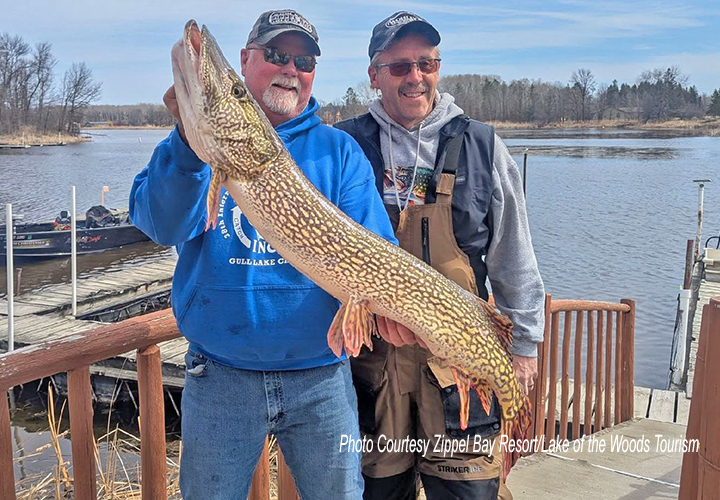
Big northern pike continue to show up for anglers across the lake. Often under the radar given the incredible walleye fishery here, Lake of the Woods is home to a truly strong population of trophy pike. Shallow bays, leeward shorelines, and near-shore structure are all worth targeting, and casting or trolling shoreline structure can put pike in the boat alongside other species. Nice pike are often caught by unsuspecting walleye anglers. Pike regulations: The limit is 3 fish per day with one over 40 inches allowed. All pike 30–40 inches must be released immediately.
Smallmouth bass continue to show up on rock piles in 6–15 feet of water, and working shoreline structure is a natural way to connect with them. Bass fishing often gets overshadowed by the outstanding walleye fishery, but the bass are here in good numbers from north to south.
Sturgeon Season: The sturgeon fishery is currently closed through June 30 before the harvest season resumes July 1–September 30, 2026.
Muskie Opener Mark Your Calendars: Muskie anglers have a date to circle: Saturday, June 20th, 2026 is the muskie opener for both the Minnesota side of Lake of the Woods and Ontario Zone 5. Lake of the Woods is renowned as one of the premier muskie fisheries in North America, and the opener is always an exciting event. Start getting your gear ready — June 20th will be here before you know it.
Know Your Limits: The combined walleye and sauger posession limit is 6 fish total, with up to 4 being walleyes. All walleyes between 19.5 and 28.0 inches must be released immediately, with one walleye over 28.0 inches allowed. A 2026 Minnesota fishing license is required.
Fishing Guides Available: Fishing guides from Rainy River and Lake of the Woods resorts are ready to put you on fish. Everything is provided — boat, tackle, bait, and the local expertise that makes all the difference. Book now, as prime dates fill quickly." — Lake of the Woods Tourism, (800) 382-FISH
Ely Area, Arrowhead Outdoors Fishing Report May 27, 2026
 "Walleye anglers are now starting to report mixed results. As water temps rise upwards of 56 degrees, walleyes have started dispersing throughout the lake now. Anglers should now be looking for shoreline rocks, rocky points or windy shorelines in that 2 to 12 feet of water.
As water temps continue to warm this coming week, leeches fished under a bobber will quickly become the most effective way to catch walleyes. Evening hours will be the best time to fish these areas as walleyes will slide up shallow looking to feed. Minnows will still be working, but they will be more effective in that deeper water, say 8 to 15 feet now. Reports of paddle tails working really well in shallow water have also been coming in. Gold, pink and orange/gold were hot colors this last week.
Smallmouth Bass are now in that pre-spawn mode and may start spawning later this week on shallower lakes. Anglers have really noticed a jump in the numbers of bass that are showing up on shallow rocky/gravel shorelines this last week. Anglers should continue to focus on these areas for the next few weeks. Suspending minnow baits and square bills have been extremely effective on bass this last week, but wacky worms, fuzzy balls and Ned rigs also accounted for their fair share of smallies.
Panfish are now largely being reported in shallow bays as they begin to get ready to spawn in the coming week or so. Anglers continue to report some good panfish fishing in 10 feet of water and less, in shallow bays. Fishing slow continues to be the key here. Crappie minnows, red worms or wax worms, fished under a bobber has been very effective.
Northern Pike have become very active this last week for many anglers. If you can find them, big lively suckers, fished under a bobber, right off the dock, have been very effective. Can't find suckers, no problem. Frozen herring, smelt and alwifes, fished the same way, has been catching plenty of pike too. Just like all the other species, shallow water has been the name of the game for finding active pike. Areas where the weeds are popping up, river mouths and muddy bays have been where to look for the pike.
Lake Trout - Finally a weekend with no heavy winds, finally has some good lake trout reports coming in. Anglers are reporting water temps, on lake trout waters, still in the mid to upper 40's. This means lake trout are still being found just about anywhere in the lake.
Many anglers reported catching lake trout while looking for bass or walleyes in 10 feet of water or less. Anglers focusing on lakers reported catching quality lakers out in 25 to 40 feet of water, while trolling deep diving crankbaits or heavy spoons. Silver and blue spoons and crankbaits seemed to be the most common color reported.
Stream Trout - Rainbows were a popular target this last week and many anglers reported catching some quality rainbows. Small spoons, spinners and night crawlers fished under a bobber or off the bottom, were very effective for anglers this last week. Depths varied greatly from right under the surface to 50 feet of water." — Arrowhead Outdoors, 218-365-5358
More Recent Fishing Reports
Follow on X • Follow on Facebook • L.O.W. 5-27 • Ely MN 5-27 • Sundin 5-26 • Upper Red Lake 5-23 • Winnibigoshish 5-21 • Ely MN 5-20 • L.O.W 5-20 • Winnie 5-20 • Upper Red Lake 5-15 • Lake Winnie 5-14 • Sundin 5-12 • MN Walleye Opener 5-10 • Rainy River 5-6 • Crappies 5-4 • Cutfoot Sioux Walleye Spawning • Justin Chromy • 3-6 Mille Lacs Open Water Walleye Limit • 3-5 MN Walleye Limit Reduction • Schara Walleye Limits • Walleye Limit 2-1 • Walleye Limit 1-27 • IOWA Limits 1-23 • 1-22 Walleye Limits • Gary Barnard 11-11 • Technology 10-25 • Charts 1-23-25 • MAPS 1-22-23 • Barotrauma Study 1-25-24 • Fish Consumption • Forward Sonar • Panfish Workgroup
Brainerd MN Area Fishing Report May 26, 2026
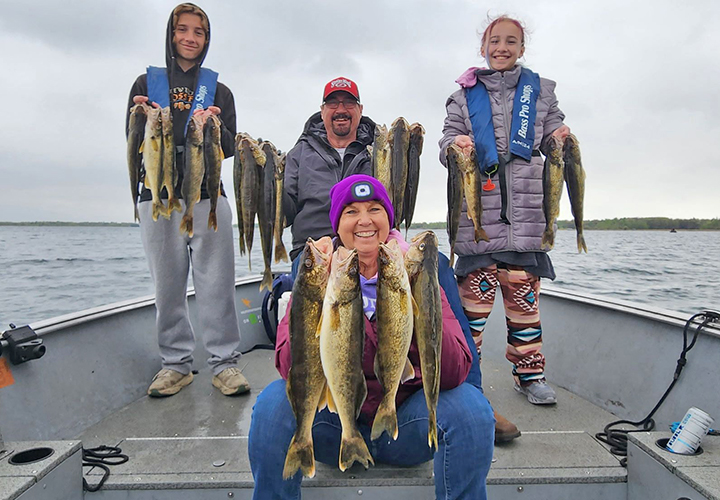 Joe Billiar: "The walleye bite in the brainerd lakes area has picked up tremendously.
On most bodies of water, surface water temperatures are ranging from 54 to 58 degrees. Key depths for walleyes have ranged widely from lake to lake. Some lakes, the walleyes are still holding along shore in about in 8 feet of water. There are other lakes in the region where walleyes are in 20 feet, located off the first shoreline breaks.
The largest pods of walleyes are relating to either sand bottom or off any weed edges.
Jigs tipped with shiners or most any other minnow in the 3 inch range have worked best. We are also catching some walleyes using a bobber and night crawler. Work jigs very slow with small hops about 6 inches to a foot with ear hop. Keeping distance from the fish has been very important. With the clear water, most fish will not allow the boat to come within 40 feet without "spooking".
Northern pike are in the shallows relating to almost any weeds they can find. That said, if you can find either cabbage or coontail, it’s almost certain a few pike will be using those.
Crappies are up shallow, found in water depths as shallow as 3 feet, or sometimes out to about 8 feet. Currently, sunny days have been best and on those days, crappies have been eating well.
For crappies, use hair jigs, small plastics, or crappie minnows, they have all been producing fish. Look for back bays or emerging reeds. We've been selective about the ones we keep, selecting smaller fish for harvest and letting the larger ones go.
With warmer weather for the foreseeable future, the minnow bite will begin to shift to leeches and crawlers once the first big big hatch happens. Good luck and tight lines!" — Joe Billiar, Crooked Hat Guide Service • 507-469-2714
 Wired2Fish May 12, 2026 "How the Pros Tie the FG Knot"
 "The FG knot remains one of the best ways to connect braided line to a fluorocarbon leader. In this video, Matt Becker explains why the FG knot continues to stand out as one of the strongest and most dependable line-to-line connections in bass fishing – while adding some new twists on how to tie it.
Why the FG Knot Works So Well: One of the biggest advantages of the FG knot involves durability. Becker explains that a properly tied FG knot can last without failing. That reliability becomes especially important when fishing finesse techniques, clear water, or pressured bass. Additionally, the FG knot excels because of how smoothly it moves through the guides. Bulkier knots often catch during long casts, especially with ..." Read Story and Learn More >> How the Pros Tie the FG Knot
May 26, 2026 "Arrowhead Area Night Fishing Season Heating Up"
 The kids are at it again. Our youngest daughter Joelle, and her husband Patrick have been prowling the shores of their favorite arrowhead region, walleye lake. Compared to typical fishing seasons, this one had gotten off to a slower than usual start. Cold water temperatures and late spring had not yet triggered walleye migrations into shallow water.
This weekend things changed, surface water temperatures finally reached into the low 50s, and the “night bite” began ramping up.
On their first night of the Memorial Day weekend, their trip began around 8:30 pm. By 10:00 pm, they’d caught a pair of walleyes, an 18 and a 20-inch walleye. On the second night, things started slower, but in the end, turned out to be the better outing. Joelle, “We got out at about 8:30 and we weren’t getting a single bite. So, at about 10:00 we were getting ready to call it a night and head in. Just then, walleyes started hitting hard and in the next 45 minutes we had 5 keepers, 16-to-20-inch fish. Patrick released a 26-inch walleye, and I let go a smaller, 12-inch fish too.”
The water depths range from 4 to 8 feet deep depending on the night, and water conditions. The preferred presentation is trolling the shallow water rocks and gravel using the old reliable black and gold Rapala. That lure has been the kids’ favorite bait for a long time now and we’ve seen it in action; it really does put a lot of fish in the boat.
On a side note, their weekend fishing trip demonstrates how unnecessary high technology can be. Our kids, fishing without any electronics at all, managed a beautiful catch of walleyes. Typically, they’d use a depth finder, but even then, its main function is to help prevent them from running too shallow and hitting the rocks.
I think another recent story about catching fish without using high end electronics is relevant here too.
Last week, George Broberg wrote, “Well, Dominic Broberg and I fished the first Aim Pro Walleye Series event of the year yesterday (May 17, 2026) on Lake Winnie.
It was a cold windy day, but that was only part of the difficulties. Some of our fish moved and walleyes were tough to catch early. Then at about 9 am, my trolling motor bolt snapped in half. The only thing that saved it from going into the drink were the power and control cords!
Now, we were not only trolling motorless, be we had no live scope either. It’s tough to compete against the best, when you aren’t on a level playing field. But, we sat down, ate a sandwich and decided to go to old school methods! We used side imaging to find fish and began drifting over them.
In the end, we filled our card with enough fish to be respectable. We were nowhere close to winning, but the catch was respectable. I was proud of our attitude despite the equipment failures. Fishing was quite enjoyable; we laughed and had a relaxing rest of our tourney day.” By the way, I fixed it today and put in a higher-grade replacement bolt.”
If you're heading for the lake soon, I'd encourage you to follow George's example. Take a minute to remember and enjoy the fishing for what is, the technology will take care of itself. — Jeff Sundin, The Early Bird Fishing Guide Call-Text 218-245-9858 • Email • Facebook • X • Subscribe Insider Newsletter
Today's Feature Fishing Report: Jeff Sundin - May 22, 2026 "Jeff Sundin Memorial Weekend Fishing Report"
 Judging by the traffic I observed between Bena and Grand Rapids on my way home Thursday evening, there are a lot of anglers in the area already. For those of you who arrived early for the Memorial Day holiday weekend, live bait supplies are already taken care of. But for folks who are heading into north central Minnesota today, or for locals planning a day trip this weekend, you’ll be interested in breaking news about minnow supplies.
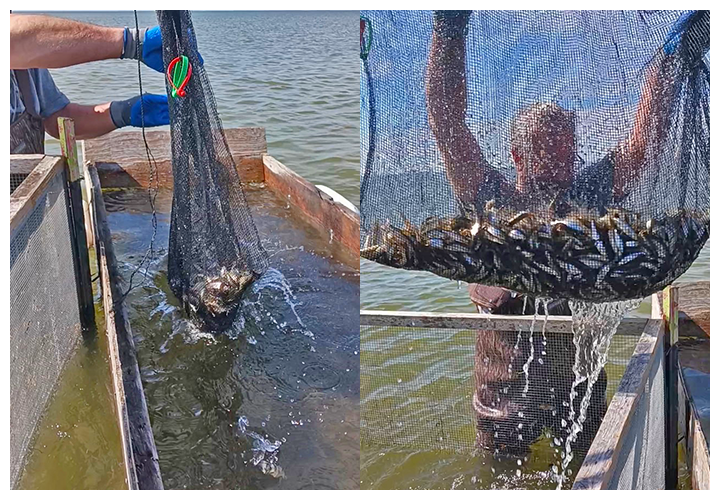
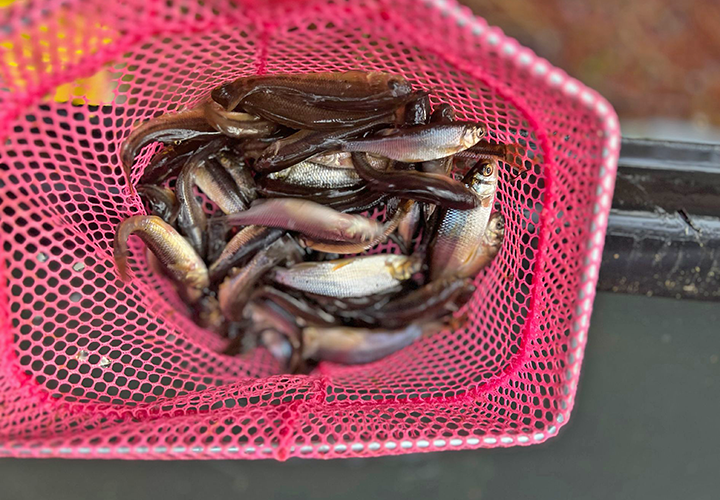
My friend Chad Benson, one of the better live minnow trappers in the region has been updating me about spottail shiner supplies. Yesterday, Chad sent me an update regarding the spottail spawning migrations he’s been following. The warm, sunny weather and calm surface conditions triggered some movement on Thursday. It was a pretty good day for Chad yesterday and as the photos reveal, some of his traps were filled with freshly arriving shiners.
I don’t necessarily favor shopping at one bait shop vs another, but I do happen to know that a large portion of the minnows Chad traps will wind up at the Northwoods bait and tackle shop in Bemidji. Other bait suppliers in the Bemidji, Deer River and Grand Rapids region will receive minnows from Chad’s territory too. So, if you’re headed this way, shiners will likely be on hand today, and probably throughout the weekend.
Lake Winnibigoshish, another popular lake for shiner trappers, is on the verge of bolstering minnow supplies too. Yesterday, surface water temperatures pushed up into the middle 50s, 55 to 56 degrees were observed by me during my fishing trip. There were some early reports of trappers finding minnows in their sets yesterday too. By today, Winnie could easily enter its peak period for shiner migrations.
I’ll learn more about minnow supplies on my way to the like this morning, and I’ll post an update this evening when I get back home. If you, or your friends have news about live bait supplies in your area, I’m sure folks would appreciate an update. Drop me a line via text or email, and I’ll happily add your reports to the update.
Another benefit of the shiner migrations will be the arrival of hungry predators along the shorelines of the better “shiner lakes”. Yesterday, I noticed more walleyes hugging shoreline breaks in the 8-to-10-foot depth range. Walleyes were more easily captured by my crew, Larry Lashley, and Mike Cooley than they were during the two days previously. Friends reported an uptick in walleye action along shore too, and catching keeper fish size improved for them as well. All of this is good news for folks who will be on the lakes this weekend.
We focus a lot on shiners, remember though, there are other minnow and small gamefish moving into shallow water too. Most lakes in the region have strong populations of small perch, and these minnow size gamefish are equally, if not more important to predators. No matter which lake you’ll be fishing, checking shallow sand flats will be a good strategy for finding walleyes in the coming days.
I’ll drop as much information as I can, as fast as I can, about how the changing conditions impact fishing action for the holiday.
Lake Winnie Cutfoot Sioux Fishing Report May 21, 2026
 "To date, the most consistent walleye fishing locations have been weed flats in back bays, incoming flowages and protected portions of the main lake. Water depths of 6 to 14 feet, semi-soft marl and sand bottom content covered with newly emerging vegetation provide cover for baitfish. Often, these regions have featured somewhat warmer surface temperatures; 53 degrees vs the 50 to 52 degrees found in main lake areas. Walleyes have roamed the flats, feeding on minnows holding tight to the sparse vegetation.
Typical of most early seasons on Cutfoot and Winnie, jigs and minnows dominate the presentation. Slow-trolling, controlled drifting and spot-locking have offered the best boat control for jigs and minnow presentations. Speed is important, in the cold water, .5 to .7 mph is ideal. Allow walleyes plenty of time to engulf the entire bait and lure combination. Be patient, steady pressure, leading into a firm, but smooth hookset will produce the most consistent hook-ups." Read Full Report >> May 21, 2026 Bowen Lodge Lake Winnie Fishing Report
May 20, 2026 "Thoughts on Baitfish Driven Walleye Migrations"
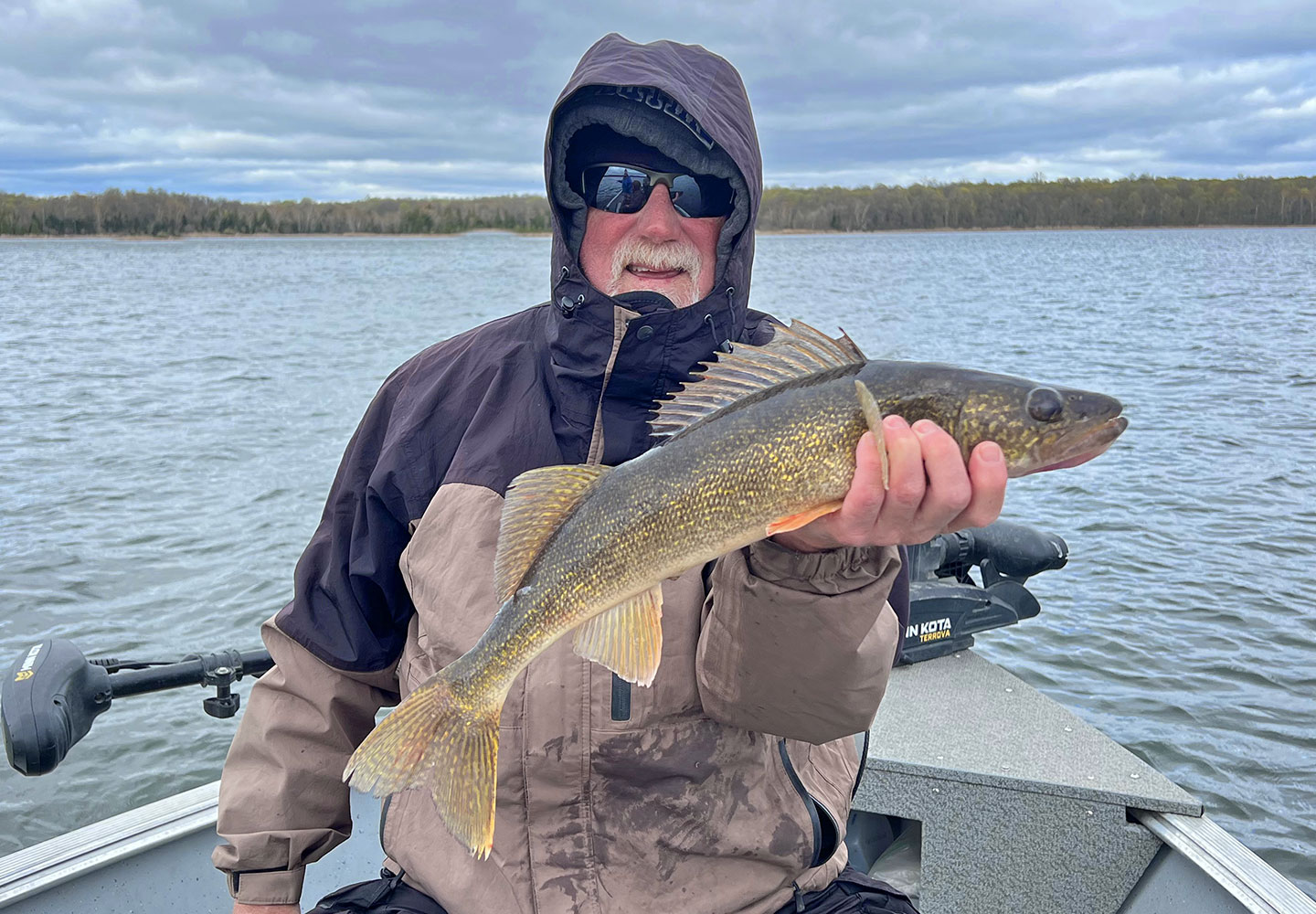 Walleye fishing has been something of a head scratcher for me this week. Changing weather conditions and strong winds have forced me to fish someplace different every day. So, in the infancy of the fishing season, lacking firsthand information about where most fish are located, my customers have been treated to a lot of searching.
There have been a couple of locations where fishing for walleyes has been “semi-reliable” but even there, the action is inconsistent. One day, reports of good fishing in each spot come via text message or email. But the next day, visiting that spot yields disappointing results. Yesterday, I developed a working theory about why walleyes are moving in and out of the so-called hot spots where the “spotty” fishing has occurred. The theory, based on comparing notes from friends, has to do with moving baitfish migrations.
I don’t have time to do the subject justice this morning, but the short version of my theory is this. Minnows and small fish move onto shallow flats when the water conditions are favorable. While the baitfish are present, so are the walleyes. But when conditions are unfavorable, schools of minnows move away from the shallows, and walleyes, finding nothing to eat, also evacuate the area.
Over the past several days, the solution to finding walleyes once they move has been to locate weedy flats in slightly deeper, warmer water. For example, walleyes found on shallow, 5- to 7-foot-deep sand flats on Monday, were gone on Tuesday. The cold and blustery weather forced baitfish off the shoreline, I think, and they moved in scattered patches of vegetation in water depths of 8 to 10 feet. Once we found them, they bit. So, I think the secret to catching fish consistently is exploration. Keep moving until you find some fish, and you’ll be rewarded with decent action.
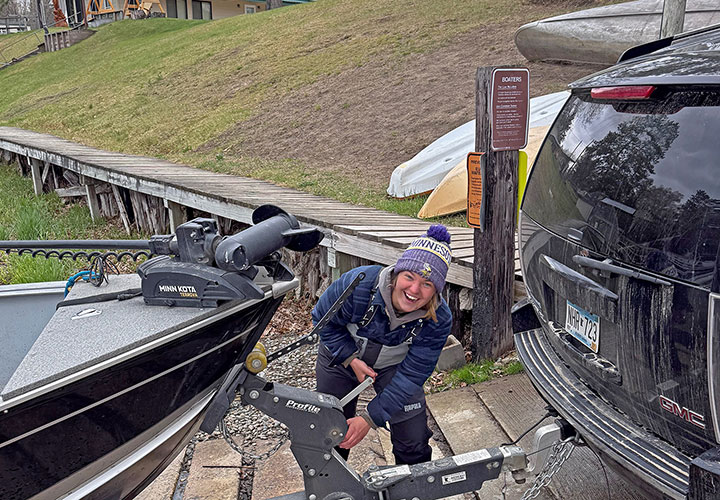 Moving around can be a difficult part of the equation. When the air temperatures are in the 40s, and the winds are in the 20s, traveling is uncomfortable to say the least. Public boat ramps are not always located in the best spots for comfortable travel. That’s why I’m grateful that there are some great resorts, located in protected locations around the region. Yesterday, one of those resorts, McArdle’s on Lake Winnie’s west side provided not only safe harbor, but a sense of welcoming.
Abbie, working in the marina, not only made loading and unloading my boat easier but kept my crew entertained while I walked up the ramp to get my vehicle. For me, the crew and Abbie sharing stories at the dock was one of the highlights of my day. Gavin, another very accommodating and friendly face at their marina, does the same thing, and so does everyone else at McArdle’s for that matter. The next time you’re faced with a strong wind from the west, do like me and save yourself the trouble of pounding across the lake on whitecaps, give McArdle’s a try.
When the wind changes, so will the best access points, so I’ll make a point of sharing some more of the better places to launch a boat around the region.
In the coming days, I’ll add more to my thoughts about the baitfish driven walleye migrations. In the meantime, I’d be interested in your thoughts, or alternative theories you have to share too. It’s easy to find me, so don’t be shy. — Jeff Sundin, The Early Bird Fishing Guide Call-Text 218-245-9858 • Email • Facebook • X • Subscribe Insider Newsletter
Ely Area, Arrowhead Outdoors Fishing Report May 20, 2026
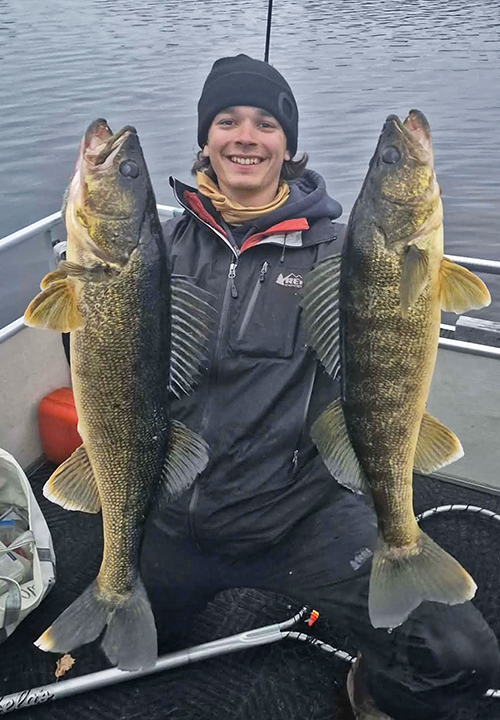 "Walleye • Water temps reached 53 degrees this last week and with that minnows continue to be the name of the game for walleye anglers. 4 to 12 feet of water near current areas or shallow rocky flats, continues to be the best depth for walleye right now.
Anglers should expect this bite to continue this next week, but signs of change are already being reported. Anglers fishing shallower lakes where water temps reached 57 degrees, leeches out produced minnows. Here paddle tails and twisters also out produced minnows. Gold, pink and black/orange were top selling colors this last week.
Smallmouth Bass • Many walleye anglers reported this last week that smallmouth bass are really starting to show up on their hot walleye spots. Bass anglers should be looking for rocky shoreline areas that get a good amount of sun. This warms up the water a few degrees warmer than surrounding areas. Square bill crankbaits and suspending minnow baits have been red hot for triggering bites. Anglers should focus their efforts in 5 to 12 feet of water.
Northern Pike • Fishing continues to be on the hit or miss side. When anglers get into the right bay, it's lights out! Get into the wrong bay, it's really, really slow. Heavy winds are likely to blame here as the wind turns up the water and keeps it from warming up. The largest suckers, you can find or frozen baits like herring, smelt or alewives, fished under a bobber, have been very effective in the right bays. If bobber fishing isn't your thing, large minnow baits or spoons have been catching their fair share of quality pike. Anglers should continue to focus their efforts in sheltered bays in 5 to 12 feet of water. Water coming in is a big plus.
Panfish • This up and down weather and high winds has made the panfishing challenging For anglers. Anglers focusing on shallower, dark water lakes have been having the best success this last week. Dark water and sheltered bays help warm the water as much as 10 degrees warmer than bigger lakes. This much of a difference means panfish are much more active. Anglers had great luck fishing with crappie minnows or small tube jigs, under a bobber near downed trees or warm bays on the northside of lakes.
Stream Trout • Reports were few and far between again this week, likely because high winds don't make it very enjoyable to sit on the shoreline or in a boat. The few reports we got were of a slow bite. Nightcrawler fished about 4 to 8 feet deep, under the bobber, caught some nice trout. If the wind was blowing too hard, floating a crawler off the bottom, about 2 to 4 feet was also effective on trout.
Lake Trout • Fishing reports were also few and far between. High winds again were to blame. Anglers reported that when they were able to get out over lake trout waters the fishing was pretty good. Anglers trolled black/silver or blue/silver deep diving crankbaits were very effective. Key depths were 25 to 40 feet of water." — Arrowhead Outdoors, 218-365-5358
Lake of the Woods Fishing Report May 20, 2026
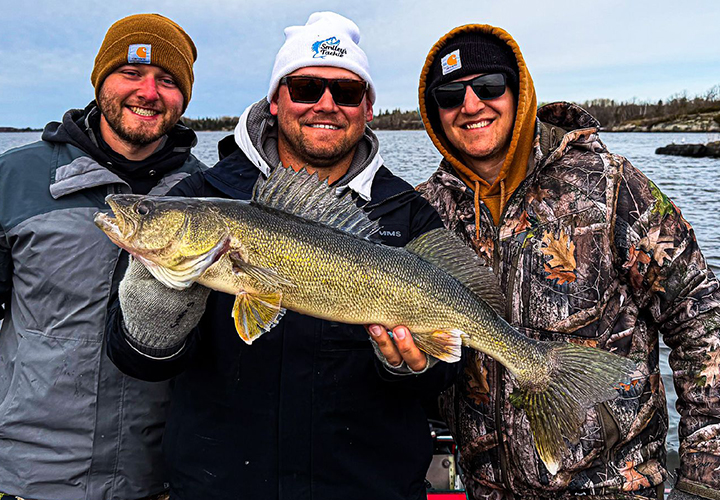 "It has been a cold spring, but guides and charter boats have found good numbers of fish and despite the cold weather. For most anglers, nice catches have been coming in despite wind and changing barometric pressure systems. Water temperatures are still in the mid-40s, and the majority of walleye anglers are getting it done with a jig and minnow. Those traditional jig colors, gold mixed with glow white, pink, orange, or chartreuse continue to produce.
Warm, summer-like weather is in the forecast, and will be very much welcomed. Trolling crankbaits already producing good results according to reports from some anglers. Trolling crankbaits at speeds of 1.8–2.5 mph is a great way to cover water and locate fish and will be increasingly effective as conditions improve.
It is good to remember that not every walleye in the system is doing the same thing. Fish are targeting forage in various areas. Some fish are still in the Rainy River and Four Mile Bay. Others are spread across the south shore of Big Traverse Bay, where near-shore structure like rock piles and sand-to-gravel transitions are holding fish.
Up at the Northwest Angle, points and areas where the water is just a bit warmer have been holding some very nice fish. As the water continues to warm through the week, expect fish to become more active and the bite to get better across the board.
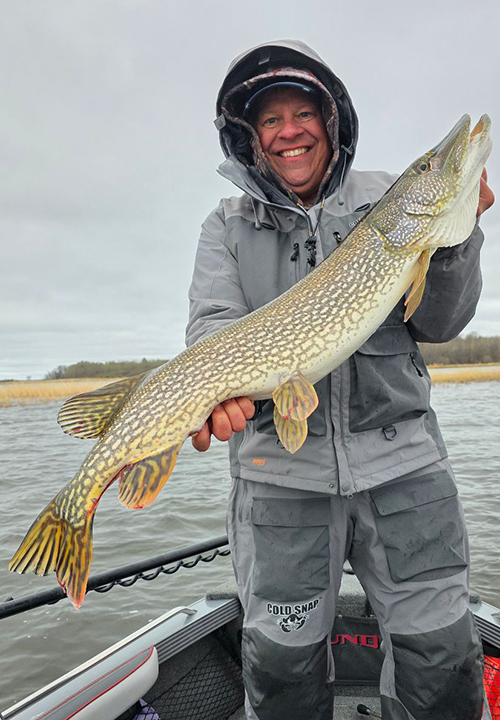 Big northern pike have been showing up for anglers across the lake this week. Often under the radar given the incredible walleye fishery here, Lake of the Woods is home to a truly strong population of trophy pike. Shallow bays, leeward shorelines, and near-shore structure are all worth targeting. The season is open year-round, making pike a great option any day of the week regardless of conditions. Anglers are allowed to posess a limit of 3 northern pike, one of which may be over 40 inches. All pike betwenn 30 to 40 inches must be released immediately.
Smallmouth bass have been showing up on rock piles in 6 to 15 feet of water. Like pike, bass fishing often gets overshadowed by the outstanding walleye fishery on Lake of the Woods, but the bass are here in good numbers from north to south. The Rainy River, reefs across Big Traverse Bay, and the waters amongst the 14,552 islands of the Northwest Angle all provide excellent habitat. If you're looking to mix things up, it's a great time to target them.
The sturgeon catch-and-release season ended on May 15, 2026. The fishery will be closed from May 16 through June 30, 2026 and the next sturgeon harvest season will begin on July 1, 2026.
Catch and release: May 8–15, 2026 Closed: May 16–June 30, 2026 Harvest season resumes: July 1–September 30, 2026
Mark your calendars for the musky fishing season opener. Saturday, June 20th, 2026 is the muskie opener for both the Minnesota side of Lake of the Woods and Ontario Zone 5. Lake of the Woods is renowned as one of the premier muskie fisheries in North America, and the opener is always an exciting event. Start getting your gear ready, June 20th will be here before you know it.
Know Your Fish Limits on Lake of the Woods and Rainy River
The combined walleye and sauger limit is 6 fish total, with up to 4 being walleyes. All walleyes between 19.5 and 28.0 inches must be released immediately, with one walleye over 28.0 inches allowed in posession. A 2026 Minnesota fishing license is required.
Fishing guides from Rainy River and Lake of the Woods resorts are ready to put you on fish. Everything is provided — boat, tackle, bait, and the local expertise that makes all the difference. Book now, as prime dates fill quickly." — Lake of the Woods Tourism, (800) 382-FISH
May 17, 2026 "Warming the Warm-Able, Moving in the Right Direction"
 On Saturday, Chuck Johnson wrote, “What is the water temperature up there?”
Chuck, as of Friday (May 15, 2026, we found 56 degrees in the back bays of Lake Winnibigoshish. Out on the main lake, the surface water was cooler, 51 to 53 degrees on the west side. The gusty west wind kept us away from most of the exposed portions of the lake, but I think using the low 50-degree range as rule of thumb is a safe bet.
I didn’t have a trip on Saturday, but there was lots of sunshine and warm weather at midday. During that time, I began receiving reports from some of the bait trappers in the region. The warming trend triggered some baitfish movement and some of the local bait shops announced supplies of shiners coming into their stores.
Fred's Bait, Deer River, MN wrote, "We just got some Big Winnie shiners in. Purchases are limited to 1/2 pint per customer until they are gone. Both the wind and cold weather have made trapping difficult to impossible to this point."
Full Stringer Bait and Tackle, Longville, MN offered this. "We’ve still got a great supply of spottail shiners, and now we’ve added creek chubs to the mix! Also stocked up with nice big fatheads and plenty of other bait."
Near Grand Rapids, small ponds have produced good supplies of fathead. This spring, the fatheads I’ve seen are beautiful, they are both larger, and livelier than I’ve seen in a few years. This weekend, golden shiners began showing up in the mix too and the early supply I saw yesterday looked really good.
All of this adds up to good news, and overall, the outlook for this week looks positive. As baitfish inhabit the shallow waters, gamefish will show up to take advantage of the easy pickin’s. Walleyes, pike and perch found spread out across the flats will likely begin forming larger schools along shoreline breaks, adjacent to the shallow sand flats where minnows spawn.
Today, I begin a 6-day stint of fishing trips and firsthand updates will be plentiful. Today, we'll get another firsthand report from the east side of Winnie and in Cutfoot Sioux. So be sure to check in on Monday morning for details about the trip. — Jeff Sundin, The Early Bird Fishing Guide Call-Text 218-245-9858 • Email • Facebook • X • Subscribe Insider Newsletter
Today's Feature Fishing Report: Jeff Sundin - May 15, 2026 "Discovering the Discover-Able on Upper Red Lake"
 Before Thursday, I hadn’t fished on Upper Red Lake yet this season. Several of my friends had already fished there and offered me guidance. Some advice about the methods they’d used to catch walleyes was very specific.
One of them arrived there last Monday, prepared to catch fish on jigs and minnows. “We drifted, trolled and fan casted using the jigs, but weren’t catching that many fish. We saw a couple of folks anchored up and catching walleyes using bobbers. As soon as I stopped my boat and set up my crew with bobbers, we started catching fish left and right. I’d say the catch ratio was 5 to 1 bobbers vs jigging.
In another conversation, the advice offered was about a fishing trip on Wednesday. “When we got to our favorite spot, we spot-locked the boat and rigged our lines up with slip-floats and jigs, tipped them with lively rainbows and ..." Read Story >> Upper Red Lake Walleye Report May 15, 2026
Lake Winnie Cutfoot Sioux Fishing Report May 15, 2026
 "On the opener, a strong, gusty wind out of the north required anglers to earn their fish! With both surface water and air temperatures still in the low to mid 40-degree range, the atmosphere had the feel of early spring. Photos of anglers we received featured folks bundled up in warm winter fishing gear. As cold as conditions were though, fish were caught!
The 2018-19 walleye year class, as we anticipated, was well represented in this opener's catch. On Saturday, many boats landed upwards of 30 to 40 fish, with most of them landing within the protected 18-to-23-inch slot sizes. Walleyes measuring 19-to-20-inch fish were most common, referring directly to the well-known and very large class of 2019. Some of the more experienced anglers reported a catch-to-keeper-ratio of 5 released fish for every 1 fish harvested.
Sunday featured slightly more of the smaller, "Keeper" fish which made an appearance in ..." Read Full Report >> May 14, 2026 Bowen Lodge Lake Winnie Cutfoot Sioux
Ely Area, Arrowhead Outdoors Fishing Report May 13, 2026
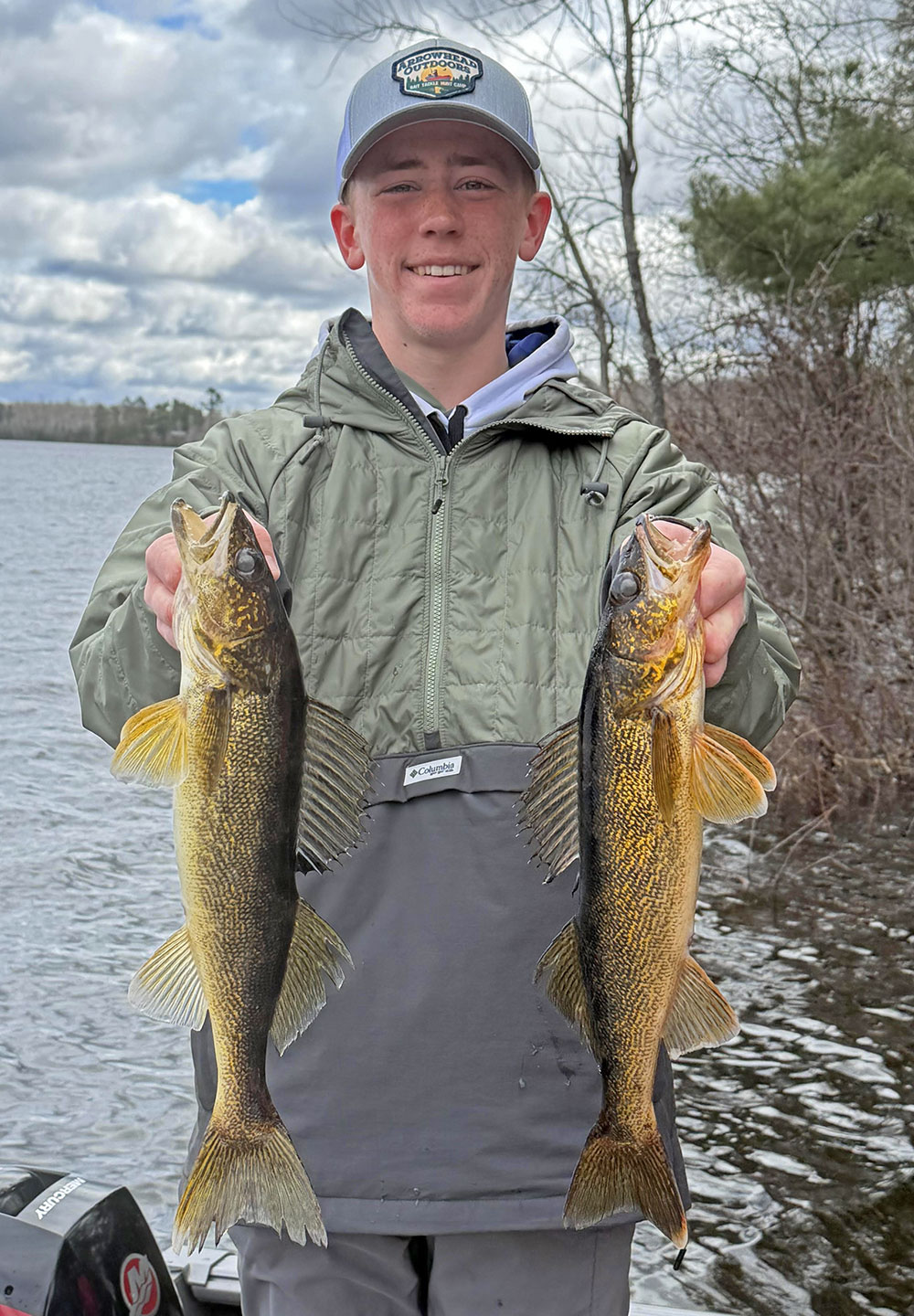 "Walleye • With water temps in the low 40 degree range throughout the Ely area, walleyes were largely in post spawn mode. When water temps are this cold, minnows still have yet to spawn in area lakes. This is a great clue as to where anglers should be looking for active walleyes. Skinny water as shallow as 1 foot held aggressive walleyes during the evening, after dark and early morning hours. Many anglers focused their efforts in that 2 to 7 foot of water range.
Rainbows tipped on a 1/8 ound jig head used to fan cast around shallow rock flats and river mouths. For anglers fishing in the current driven areas, they had success fishing a little deeper waters in 15 to 24 feet of water, also using jigs and minnows.
Many of the walleye being caught in the current were under 20 inches. Mostly males in the "eater" size range. No minnows, no problem. Long line trolling shallow swimming minnow baits, during the evening hours or after dark was also very effective for anglers. Swimming paddle tails and twister tails along windy shorelines, over rocks was also very effective for catching quality walleyes. Gold, blue/white and firetiger were all popular colors this last weekend.
Smallmouth Bass • Weather conditions over the weekend were not favorable for bass fishing, so as expected smallmouth bass fishing were very limited. With such cold water temps anglers need to slow way down to get bites.
Medium to small suspending minnow baits are the best way to go right now. Be sure to fish these baits with an uncomfortably long pause, to get the bass to bite. Anglers should look for areas where there are shallow rocks that will absorb the warmth from the sun during the day, thus raising the water temps a few degrees around the rocks. This little difference is all it takes to really turn on the smallmouth and turn a slow day into an incredible day of bass fishing.
Northern Pike • Pike anglers reported a slow start to their season. Only a handful of reports from anglers came in of pike being caught over 40 inches this weekend. The usual method was the best method. Large suckers fished under a bobber, back in the shallow muddy bays. Current areas just didn't seem to produce as well as they normally do as water levels were higher than normal. Anglers throwing artificial baits did well with large swim baits and curly tails. Best depth for pike was 10 feet of water and less during the brighter times of the day.
Panfish • Panfish anglers reported some good bites happening for crappies right now. These anglers found them at the mouths of bays where the panfish are looking to spawn in the coming weeks. Key depth for them was 15 to 25 feet of water. Small 1/16 ound jigs, tipped with a crappie minnow, were really effective.
Stream Trout • Stream trout reports were mixed this last weekend for anglers. Anglers fishing from shore reported a slow bite, fishing night crawlers under a bobber about 5 feet under the surface. Anglers fishing from a boat reported better fishing, but they had to cover ground to find biters. Again key depth for them was about 5 to 7 feet under the surface. Small, brightly colored minnow baits and copper backed trolling spoons were more effective for them.
Lake Trout • Lake trout reports were very limited as high winds keep angler seeking areas out of the wind. Still some anglers managed to connect with some big lakers with a jig and a minnow. Many of these anglers were actually looking for walleyes. Best depth was 12 to 20 feet of water, back in bays protected from the wind." — Arrowhead Outdoors, 218-365-5358
May 12, 2026 "A Step in the Right Direction"
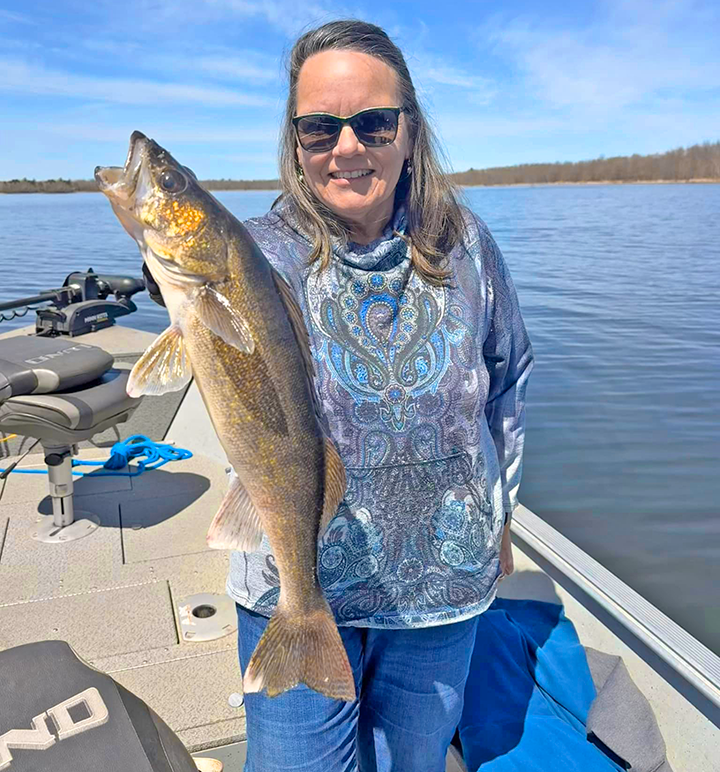 Fishing conditions in north central Minnesota took a turn for the better on Monday. Sunshine, calm water and warm air temperatures encouraged a slight rise in surface water temperatures. On a Grand Rapids area lake, the Hippie Chick and I saw the first 50 degree reading of the new fishing season. Around the region, most anglers on other lakes reported water temperatures in the 46-to-49-degree range.
The term “spotty” is the perfect descriptor for angler success around our region. Because of the cold water, some anglers have found tightly formed schools of walleyes that held tight to spawning territory. Eating size walleyes, primarily male fish are holding tight to shallow, often isolated, patches of gravel and small rocks. Once located, these fish account for most of the better fishing reports. So, if you know anyone, or see anglers reporting catching limits of eaters, these are likely the sort of locations they’ve found.
Larger walleyes, mostly female fish, have wrapped up the spawn, and are in transition away from shallow water, and headed toward steeper, shoreline breaks adjacent to mid-depth flats. They can occasionally be in larger numbers, but most often, these fish travel in small packs, doubles or even single fish. The Hippie Chick, as the image reveals, connected with one of these, singles traveling along a shoreline drop-off in about 10 feet of water.
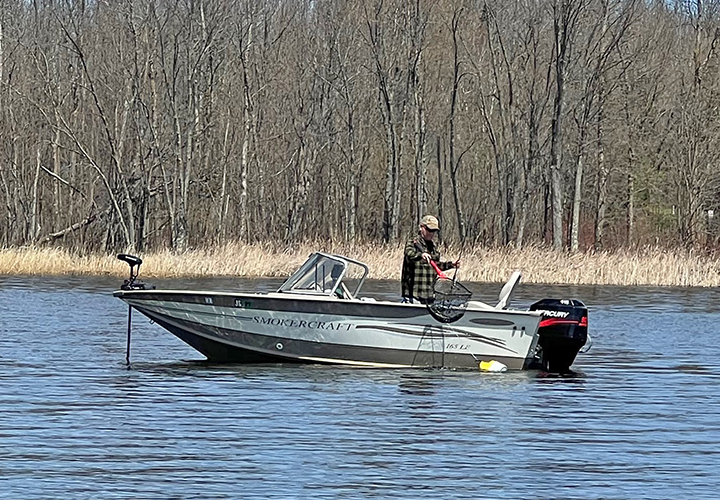 For us, and most others for that matter, jigs tipped with minnows has been the standard presentation. Yesterday though, I was reminded about a story I wrote a few years back. A friend, describing the minnows he’s been trapping, called his minnows too big. Too big for jigging maybe, but I recall using super-sized minnows like that on Lindy Rigs and doing really well during the early season.
If you stumble into a batch of extra-large shiners, rainbows or other “river mix” varieties, try rigging, instead of jigging. A standard live bait rig, 4-to-5-foot leader with a #2 hook, a ¼ to ½ ounce walking sinker, and a large, lip-hooked minnow can help you catch some nice walleyes.
Because of the blustery weather, creativity has been dampened and so has the size of the crowds. Even yesterday, with warm and calm conditions, there were not a lot of folks fishing around the area. Still, Mother Nature took a step in the right direction and I expect that as water warms up and fishing reports improve, the crowds will grow in numbers. Maybe not today though, we are apparently about to enjoy another one of the blustery, chilly days on the lake. The mid-day forecast calls for northwest winds at 15 to 20, gusting to upwards of 30 mph.
I’m all for comfort, but we want to catch some fish too, so I’m going to wiggle my way along the northwest corner of Winnibigoshish. With luck, I’ll be able to locate one of those larger groups of young walleyes lingering near their spawning spots. Watch tomorrows report for an update and progress report. — Jeff Sundin, The Early Bird Fishing Guide Call-Text 218-245-9858 • Email • Facebook • X • Subscribe Insider Newsletter
Wired2Fish May 12, 2026 "Understanding Environmental Parameters’ Effect on Fishing"
 "If you fish long enough, you start to realize something humbling: The bite is rarely about the bait. Most of the time, it’s actually about the conditions of the day. The best anglers I know aren’t just lure junkies: They’re students of the environment. They pay attention to tides, current, moon phases, barometric pressure, water temperature, wind, light penetration, and seasonal shifts. These environmental parameters dictate fish positioning, feeding windows, and movement patterns far more than the color of your crankbait ever will.
As fishermen, we don’t control the variables. We interpret them. Let’s break down the biggest factors that influence fish behavior and how understanding them can ..." Read Story and Learn More >> Understanding Environmental Parameters’ Effect on Fishing
May 10, 2026 "A Blustery 2026 Minnesota Walleye Fishing Opener"
 On the heels of last week’s Birthday Extravaganza, the Sundin-Jones families, or most of us, were in the mood for a more subdued version of the walleye fishing opener. So, instead of planning a full weekend in Grand Rapids, we decided to meet the kids halfway, in Bemidji. I’d never fished at Lake Bemidji on opening day, but it seemed like a good idea. We know that it has a lot of fish in it, and I was hopeful that we could cover enough territory to locate some of them.
On the morning opening, the bright blue sky gave me some optimism. But as the northwest breeze kicked up, and the air temperature stayed cold, comfort became a priority. So, the scheduled meeting time was set for high noon, where we’d get together at Northwoods Bait and Tackle. To avoid the heaviest waves, we’d use the boat at the ramp in the northwest corner of the lake, in calm water. With luck, we’d have a good minnow supply, a smooth launch and a semi-warm start to our fishing trip
Most of that part of the plan worked out, except that the bait shop had already sold out of shiners, and the remaining stock of “premium minnows” consisted of mostly small emerald shiners and rainbows. They had fatheads, sucker minnows and crappie bait, along with a large selection every conceivable artificial lure and soft plastic baits. For me, the fatheads they were selling were plenty good, they had good color, and were nice sized, some even bordered on large. I felt fine with the lures and minnows we had selected.
 At the boat ramp, early morning crowds had already thinned out, and we were able to launch and park without delay. The ramps were in good condition, and the water level was good, plenty deep enough for most any size boat. In short order, were on the lake, all systems fired up and ready to go!
On the lake, water temperatures were colder than I expected. My two graphs were arguing about how cold it was, 1 reading 42.5 degrees and the 2nd reading 43.5 degrees. I guess we can split the difference because I ran into a friend at the dock who told me he’d found only 1 spot where the temperature exceeded 43 degrees.
At the same time, he reported that he and his son had picked up “a few” walleyes on a shallow, 7- to 8-foot-deep shoreline related bar. That report was like what we heard from most everyone at that ramp. Most folks reported catching a fish or two, but nobody reported large catches. For us, 1 keeper perch, and 1 25 inch protect northern pike provided the only highlights. Both fish caught on the same bar, on the same lures, where others had caught their walleyes before we arrived.
The wind was cold, and unless I was willing to drag everyone over to "the windy shoreline", wouldn't have been very creative anyway. So, I moved to the north shore where sunshine and calm water improved our comfort level. Unfortunately, those conditions did not improve our catch rate. I knew the trip was near its conclusion when my daughter said, “I’d rather catch nothing here, in comfort, than to catch something over there, in the cold wind and waves.” So, after a few hours of fishing, we decided to load out and wait for a better day to schedule a re-match. Nobody was disappointed in cutting the trip short, especially our son-in-law Austin Jones.
 Remember at the opening of this report, when I wrote, “The Sundin-Jones families, or MOST OF US, were in the mood for a more subdued version of the walleye fishing opener?” Well, not sure that he’d be satisfied with our casual version of the fishing opener, Austin had already bagged his limit of walleyes before driving east to join us. He had gotten up at 4:00 AM and started his season on one of the Lakes somewhere in the Crookston area.
From ½ hour before, to about ½ hour after sunrise, he enjoyed a nice run, of what appeared to be post spawn, male walleyes. The water temperature where he was fishing was 49 degrees. His bait of choice was a black Lindy Live Bait Jig tipped with Berkley Fishing Tackle’s Powerbait “Pro Twitchtail Minnow”. That same rig, I think, is what he caught the Lake Bemidji northern pike on as well. At the time of this writing, around 7:00 AM, he was on the same lake again and reported similar fishing action as he enjoyed yesterday.
Large lakes typically lead the way on the fishing opener and yesterday was no exception. Reports from friends and family around the state were similar. Most folks who braved the cold on Saturday were rewarded with decent catches. Lake Vermilion produced limits for my friend Greg Clusiau. Reports varied, but anglers on Leech Lake, Upper Red Lake, Mille Lacs and Lake Winnibigoshish all returned to their respective docks with at least enough fish to provide protein at dinnertime.
Today, Mother’s Day gets a higher priority ranking than fishing, so I’m not sure if we’ll hit the lake or not. I’m happily planning on doing whatever the lovely and gracious “Hippie Chick” is in the mood for. I hope you and the mothers in your life find time to do something fun together too. Happy Mother’s Day one and all! — Jeff Sundin, The Early Bird Fishing Guide Call-Text 218-245-9858 • Email • Facebook • X • Subscribe Insider Newsletter
Rainy River L.O.W. Fishing Report May 6, 2026
 The Minnesota Fishing Opener for walleyes on Lake of the Woods and the Rainy River is this Saturday, May 9, 2026. Anglers are super optimistic with a very strong population of walleyes and saugers combined with what we saw ice fishing and what we saw this spring in the Rainy River. All indicators point toward an outstanding opener with healthy numbers of fish and excellent fishing conditions.
On the big lake, areas of open water are expanding as the ice out is in process. Open water is abundant on Big Traverse Bay with some lingering ice through mid-week. Will the ice be totally gone for the opener? It is hard to tell, but there is already a ton of open water as far as the eye can see in many areas. When this happens and we get some wave action, it clears out quickly. By the fishing opener, anglers will have plenty of fishable water across the entire lake system.
What anglers should expect is that many walleyes will be located near shore this weekend. The late spring means that most walleyes will not have pushed deep yet and they'll be accessible in shallow, near-shore areas across the entire lake system. Across the south shore: A combination of near-shore structure and open basins with bait will be holding fish. Look for rock piles, sand-to-gravel transitions, and areas where you can see baitfish activity.
A jig and minnow or frozen emerald shiner will be the go-to presentation. This classic spring approach has been deadly all season and will continue to produce during opener weekend.
Up at the Northwest Angle, shoreline points and necked-down areas will be key spots. These natural funnels and transition zones concentrate fish and create perfect ambush points.
The Rainy River still has a strong population of walleyes. The river and Four Mile Bay will be hot spots with the late spring. Fish that would normally have moved through the system are still staged and feeding in these prime areas.
Techniques for fishng opener success will include vertical jigging with live, or frozen bait. Anchor or spot-lock your boat over structure and work your jigs vertically and slowly. This allows precise presentation and keeps your bait in the strike zone longer.
Fan casting shorelines will be an option too. Anglers can cover more water by casting jigs toward shallow, shoreline structure and working them back to the boat. This locates active fish and triggers strikes from aggressive walleyes.
Slip jigging on the river, is popuar too. Troll slowly upstream dragging a jig at 45 degrees against the current, then drift back downstream. This river technique covers water and finds fish efficiently. Another popular presentation on the river is trolling crankbaits. A three-way rig with a 2 to 3 ounce dropper and 6 foot leader to a shallow diving crankbait works well on the river and in Four Mile Bay.
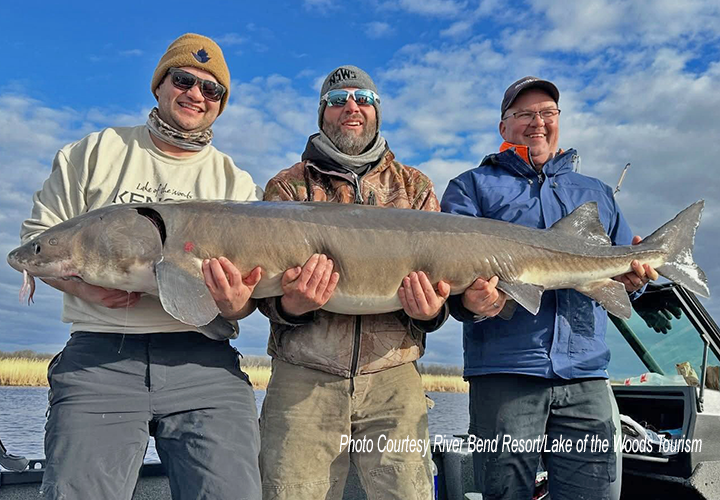 There are year around opportunities for catching northern pike because the season for them does not close. This week, big pike remain active in shallow bays and near-shore structure. Anglers are allow to possess 3 fish, with one of them over 40 inches allowed in posession. All pike in the 30 to 40 inch size range must be released immediately.
"Historic News: New Minnesota DNR Catch and Release State Record Sturgeon!
A new MN DNR catch and release state record sturgeon of 80 inches was caught April 18, 2026 by Travis Keating and has been officially confirmed. Congratulations to Travis on an incredible fish and a piece of Lake of the Woods history!
Anyone who follows Lake of the Woods and the Rainy River knew there were state record fish caught in the past and not registered. This monster of a fish is a great representation of the healthy, growing sturgeon population on Lake of the Woods and the Rainy River. This confirmation validates what anglers have known for years—Lake of the Woods holds true giants, and the sturgeon fishery here is world-class. The catch-and-release ethic combined with careful management has created a trophy fishery that continues to thrive.
Sturgeon Season Update. The sturgeon harvest season runs through Thursday May 7, 2026 giving anglers a little more time to pursue a legal harvest fish. After that, the season shifts to catch-and-release from May 8 thru 15, before closing to all sturgeon fishing from May 16 through June 30, 2026.
Lake Sturgeon Season Summary:
- Harvest season: April 24 - May 7, 2026 (1 per calendar year; fish must be 45"-50" inclusive or over 75"; must be immediately tagged/endorsed and registered within 48 hours)
- Catch and release: May 8 - 15, 2026
- Closed: May 16 - June 30, 2026
- Harvest season: July 1 - September 30, 2026
Fishing guides from Rainy River and Lake of the Woods resorts are available for opener trips. Everything is provided—boat, tackle, bait, and the local knowledge that puts you on fish. Guides know where fish are staging and which techniques are working. Book now because prime guide dates fill quickly, especially as the fishing opener approaches.
Check your tackle, stock up on jigs and minnows, make sure your boat is ready, and get your 2026 Minnesota fishing license if you haven't already. Opener is Saturday!" — Lake of the Woods Tourism, (800) 382-FISH
News Release May 5, 2026 "Minnesota DNR certifies fish of a lifetime lake sturgeon as new catch-and-release state record"
The Minnesota Department of Natural Resources has certified a new catch-and-release state record lake sturgeon, an 80-inch fish caught by Travis Keating April 18 on the Rainy River in Lake of the Woods County.
Keating called the sturgeon “the biggest fish of my life.” He caught the fish on an annual lake sturgeon fishing trip with a group of close friends.
Sturgeon fishing on the Rainy River has become incredibly popular during the spring in Minnesota, with many anglers getting the chance to land large sturgeon. Sturgeon grow slowly and can live to be more than 150 years old.
On April 18, a bitter cold front had moved in overnight, bringing 40-plus mph wind gusts and wind chills hovering around 5 below zero. Fishing was a grind. Anchored in Four Mile Bay for nearly eight hours, the crew battled relentless wind and cold, managing seven smaller sturgeon.
By evening, instead of calling it a day, Keating decided to move toward the mouth of the river, convinced the changing conditions might trigger a late bite. After an hour of pounding through waves, it finally happened. The fishing rod doubled over, nearly touching the water. Keating described what followed as “over an hour of pure chaos.”
When the fish finally surfaced, a friend managed to hoist the massive sturgeon over the boat rail and into the boat.
“Getting the fish finally in the boat was such a surreal moment that I just couldn’t wrap my head around it,” Keating said. “Now looking back, still can’t believe I was the one to catch the fish and can’t wait to get back and try to top it!”
The fish measured 80 inches long with a 38-inch girth. While it is not recommended to weigh fish for catch-and-release records, using a chart of lake sturgeon length-girth-weight estimates would put the fish around 165 pounds. That chart is available on the DNR website (PDF).
Sturgeon Recovery Success
Catching an 80-inch sturgeon on the Rainy River is also testament to the long-term recovery of sturgeon in the Lake of the Woods-Rainy River system.
Intense commercial exploitation during the late 1800s and early 1900s decimated the once abundant sturgeon population in Lake of the Woods and Rainy River. After the decline of the commercial fishery, the sturgeon population was unable to rebound due to water pollution and degraded habitat in the Rainy River, the primary spawning area and nursery habitat for young sturgeon. But because sturgeon are extremely long-lived, enough individuals managed to survive and reproduction was sufficient to maintain a small population.
With the passage of clean water legislation in the late 1960s and early 1970s, especially the Clean Water Act of 1972, the sturgeon population started to recover as water quality and habitat conditions improved. Now reproduction is successful in most years.
Population estimates of the number of sturgeon longer than 40 inches in the Lake of the Woods-Rainy River system were made in 1990, 2004 and again in 2014. The sturgeon population grew from about 16,000 in 1990, to about 60,000 in 2004 and about 92,000 in 2014. Though a population estimate has not been conducted since 2014, ongoing lake sturgeon monitoring in the Rainy River and Lake of the Woods continues to document the success of lake sturgeon recovery.
At 80 inches, the state record fish shows that very large and old individuals occur in the population. With slow growing fish that spawn at irregular intervals, this is one indicator that the population is recovering from historic over-exploitation and water quality impacts.
Current records and guidelines for each type of state record are available here at the >> Minnesota DNR State Record Fish Webpage."
May 4, 2026 "Sundin Birthday Extravaganza Crappies at Play"
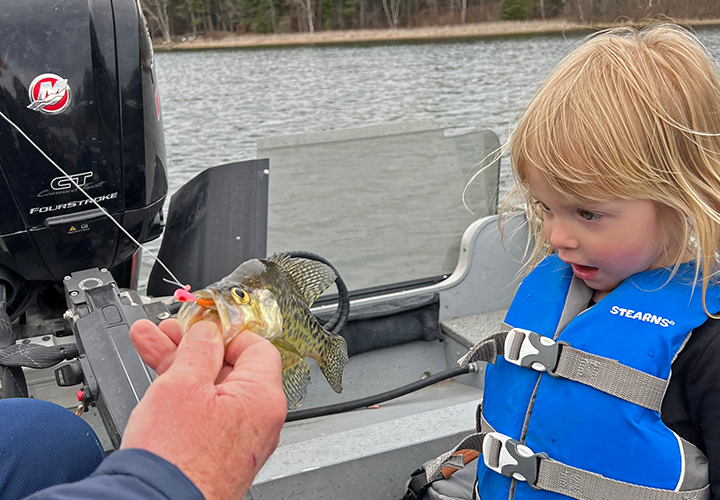 The last thing in our minds when we planned the 1st annual “Birthday Extravaganza” was fishing. I hate to say it, but when you’re looking for lodging to accommodate 17 people, all else is set aside except for beds, bathrooms and kitchen space. So, I was pleasantly surprised when the place we found, on a small, Park Rapids area lake, wound up having a bunch of small, but willing crappies.
When I first read the most recent fisheries survey from the lake, it revealed that DNR traps captured hundreds of crappies in the 7-to-9-inch range, along with a handful of 10–11-inch fish.
I know, that doesn’t sound impressive, but if you’re tasked with entertaining 8 kids, 5 grandkids, an uncle, aunt and 2 grandparents, those little crappies, if they cooperate, could come in handy. For me, luckily, they did cooperate and I’ll let the pictures do the talking about what that meant to our family.
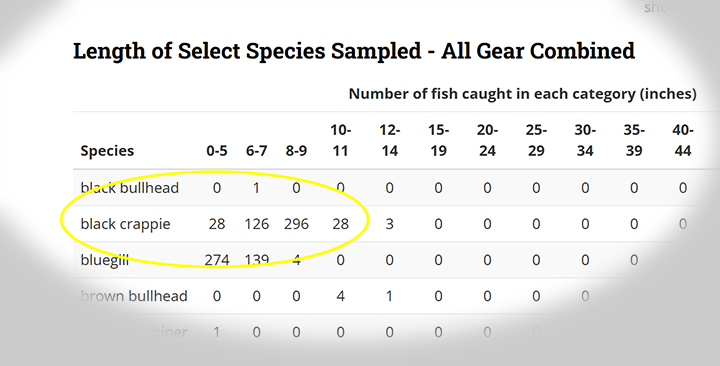 The report, informal as it is, may help you locate some panfish this week if you’re at the lake, preparing for a walleye outing next weekend.
Water temperatures varied this weekend, the lowest readings were 47 to 48 degrees on Friday evening, through Saturday afternoon. Throughout that time, almost all of the fish I located were suspended 5 to 10 feet below the surface, over water depths of 20 to 24 feet. They were adjacent to deeper, 30 plus feet depths, but not over the deeper holes.
By Sunday afternoon, sunshine had warmed the surface water and early evening readings reached 53 to 54 degrees. There was never any evidence of pre-spawning movements into shallow water. However, on Sunday evening around 7:00 PM, crappies disappeared from deep water and moved onto the shoreline for a feeding run. Schools of fish filtered through the area in water depths of 7 to 12 feet.
For a half hour or so, we caught lots of fish, but as the feeding intensity increased, the average size of fish declined. Earlier, the action was slower, but we were able to gather some larger fish.
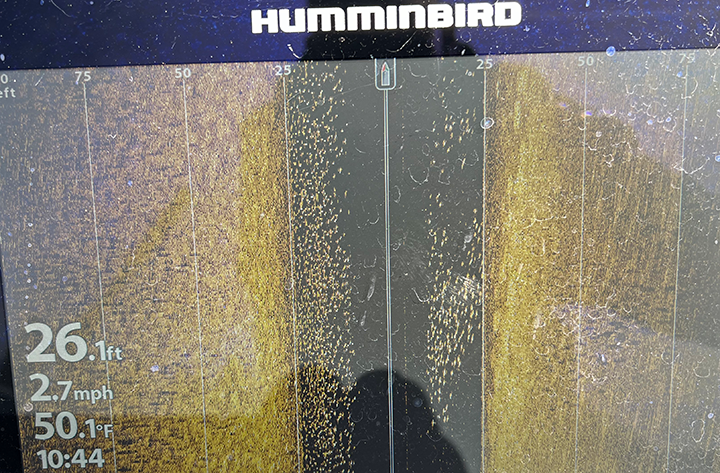 Presentation included a variety of plastic tails, added to pink/glow, 1/8-ounce Lindy Live Bait jigs. My favorite plastics this weekend were the Berkely Power Nymphs. We also caught fish on Gulp Alive minnows, Strike King Mr. Crappie tails, and 2-inch twirl tails. We used clip-on floats to suspend our jigs about 5 to 6 feet below the water surface. Even the fish located in deeper water were willing to move up and strike the suspended offerings.
Spending time comparing notes with my brother “Uncle Gary” about our youth, we agreed that fishing trips like this one are probably what accounts for our interest in fishing. I doubt the fish we caught on our family vacations were much larger than the ones we caught this weekend. Among other things, like spending time with our grandparents, fishing was only part of the experience.
This morning, we’re all hustling around to get loaded up for home before checkout time. Later, I’ll share some more photos and offer a more thorough explanation of how the Birthday Extravaganza came about, stay tuned! — Jeff Sundin, The Early Bird Fishing Guide Call-Text 218-245-9858 • Email • Facebook • X • Subscribe Insider Newsletter
Lake Winnie Cutfoot Sioux Fishing Season Outlook May 1, 2026
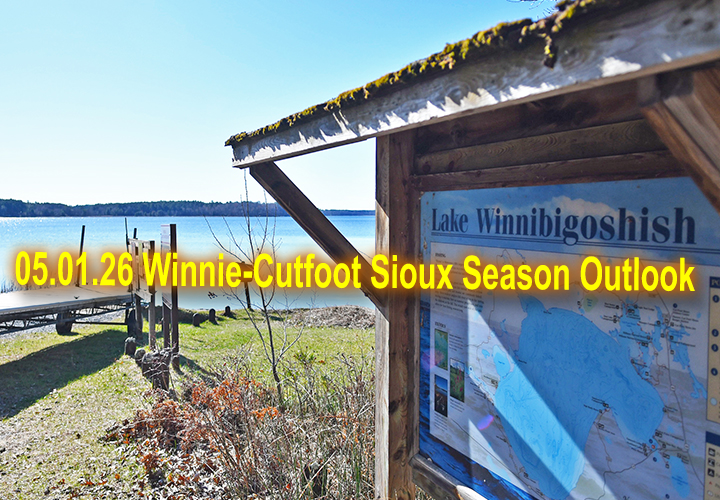 "Walleye populations, always a key topic of concern for Winnie/Cutfoot anglers are holding up well. Most of the still dominant 2019 class of walleyes have now grown into the 18-to-23-inch protected slot. That means it should be a great summer for catch, photo and release walleye fishing! That said, anglers will likely notice a decline in the number of “keeper” size, 14-to-17-inch fish from the 2019-year class.
MN DNR Fisheries testing during 2025 revealed that there appears to be a “decent” year class of fish born in 2023. Earlier this year, in presentations offered at public meetings, there was a common belief that previous test net results from both cut foot and Lake Winnibigoshish showed a 2023-year class that is above average, but not massive.
Confirmed again, just this week by fisheries staff conducting the Cutfoot Sioux, Walleye Egg Take operation, good numbers of smaller, 12-to-13-inch size walleyes did show up in the traps. For the most part, these small fish were sexually immature, and not ready to spawn. So, these 2023 fish are not likely to be prime targets for angling this summer. They will grow though, and by next spring, will begin providing both spawning stock for the lakes, and eating fish sized for anglers to harvest.
In a conversation Dan Schermerhorn, large lake specialist, testing results from the summer and fall of 2025 revealed walleyes from 12 separate ..." Read Full Story >> Bowen Lodge Lake Winnie Fishing Report
May 1, 2026 "Avoid Embarrassing, and Costly Fishing and Boating Violations"
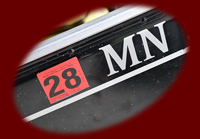 "Yesterday morning, when I opened the garage door to begin getting my boat ready for fishing this weekend, I noticed the 2025 registration decals on the starboard bow. Oops, that would have been a bad, and potentially expensive discovery to make at the boat landing this Friday. Luckily, I had already renewed the registration and obtained the new decals last winter. This morning, the pictured decals, good until 2028 are in their proper places on my Alaskan.
The incident did serve as a reminder of how easily overlooked some of the seemingly minute details can be. It reminded me too about why, last spring, I offered an article about ho to avoid making mistakes like this, and other simple, but potentially problematic slip ups.
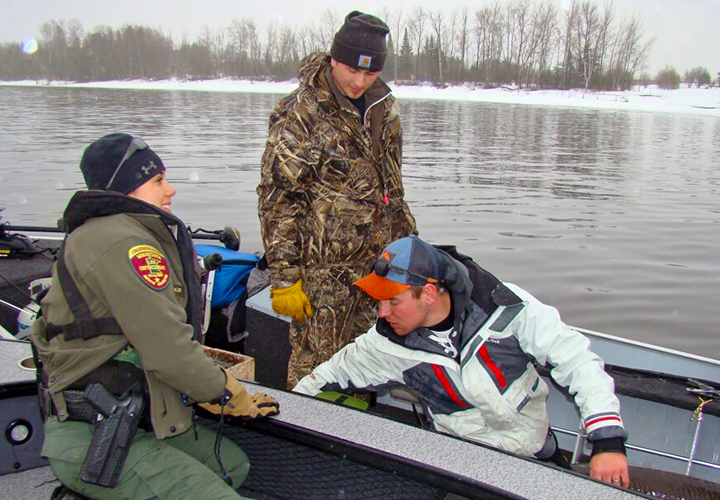 Every year, I’m amazed by the number of encounters I have with folks who commit innocent, but potentially expensive, fishing violations. Admittedly, many of the violations are not “crimes of the century”, but if they’re serious enough to warrant a citation, then they’re serious enough for us to talk about here.
With assistance of Minnesota DNR Enforcement, Lieutenant Colonel, Robert Gorecki, and Communications coordinator, Joe Albert, I put together a list of the more common offenses anglers make every year. To get assessments from varying geographic regions, Albert consulted with conservation offers (CO-s) from across Minnesota.
Today, the list I’m presenting does not cover every conceivable fishing violation, for that, you NEED to read the MN Fishing Regulations Book. But it does offer guidance that can help you avoid the most common violations that CO-s encounter in their daily work. Knowing and following these guidelines will help keep you out of embarrassing and potentially expensive jams with your local game warden." Read the full article here >> Avoid Embarrassing, and Costly Fishing and Boating Violations During the Early Fishing Season
While you're boning up on fishing regulations, I'll be taking my boat trailer in for a checkup. Tailer bearings, brake cleaning and overall inspection of the running lights and so on. Tomorrow, I'll offer sone additional guidance about last minute service checks that can help keep your rig running smooth for the fishing opener. — Jeff Sundin, The Early Bird Fishing Guide Call-Text 218-245-9858 • Email • Facebook • X • Subscribe Insider Newsletter
You Are Invited To Become A Duly Deputized Fishrapper Cub Reporter Too!
 If you've been waiting for a gold engraved invitation to participate in the daily reports, then stop waiting and consider this your own personal invitation.
Helping your fellow fishermen and women stay abreast of fishing conditions in your area is good for everybody and it's easier than you think! You don't have to write a book, you don't have to share your secret fishing spots and you don't even have to mention your lake. You see, with just a few words about general trends, seasonal patterns or local weather conditions you can help steer your fellow anglers to more gratifying fishing experiences. So, be like Dan and Sean, and become a duly deputized "Cub Reporter", it's good for fishing and that's good for everybody!
Use the Contact Us page, or if you prefer to be "social", use our community page on facebook Fishing Reports Minnesota, that is the Facebook counterpart to this page and it is open to the public, so you can post your own fishing update or just share a photo of a nice catch.